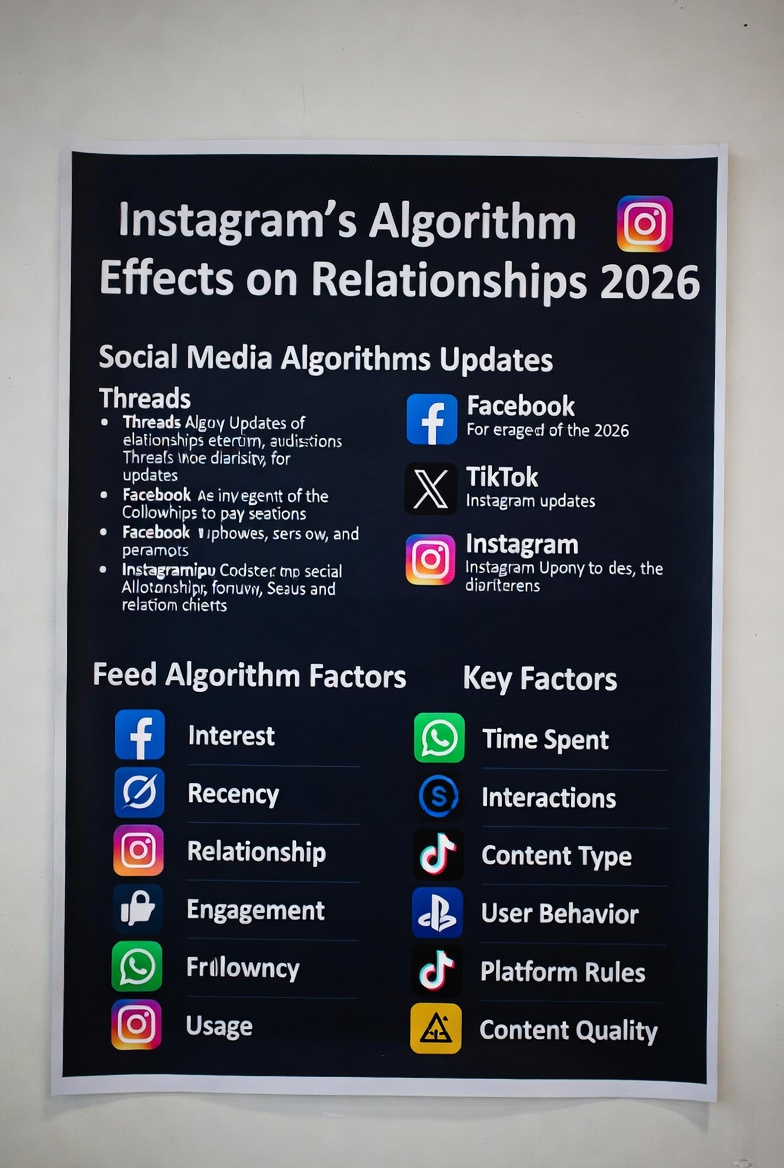

In today’s digital age, love isn’t just between two people—it’s mediated by algorithms on platforms like Instagram. If you’ve ever scrolled through your feed during a rough patch and felt your doubts amplify, you’re not alone. This article dives into how the lack of cognitive security erodes relationships, turning fleeting discomfort into permanent rifts. Drawing from insights on social media’s psychological impact, we’ll explore the mechanisms at play and offer practical advice to reclaim your bonds. Whether you’re in Shillong, Meghalaya, navigating long-distance love or local connections, understanding “social media effects on relationships” could save your partnership in 2026.
The Third Wheel in Modern Love: Algorithms as Silent Governors
Relationships today are under constant surveillance—not by partners, but by your social media feed. What starts as innocent scrolling becomes a form of governance, where algorithms calibrate your emotions. Feeling longing or frustration? The feed serves content that locks you in, hardening temporary feelings into fixed identities.
Cognitive security—the ability to maintain judgment, attachment, and reverence—is essential for love. Without it, minds become porous, bombarded by short-form content that fragments attention. A porous mind can’t hold ambiguity; instead, it turns friction into accusation, outsourcing resolution to viral trends. As @avinash_fx, I’ve seen similar patterns in finance where market noise drowns out sound judgment—here, it’s emotional noise eroding intimacy.
The Banal Mechanism: From Stress to Implanted Beliefs
The process is simple yet devastating. Stress weakens prefrontal control, leading to impulsive scrolling for relief. In this numbed state, beliefs slip in unchallenged. Repetition seals them: The first exposure plants the seed, the second makes it feel native. Soon, “this is what I saw” becomes “this is how I see.”
Instagram’s algorithm excels here. During turbulence, it doesn’t promote repair—trending reels push “toxic” labels, “bare minimum” standards, and “choosing yourself.” A pause on such content signals vulnerability, flooding your feed with breakup narratives. Your partner shifts from beloved to burden, all inferred from data.
If you’re searching “Instagram algorithm effects on relationships,” know this: It’s designed for engagement, not endurance. In Meghalaya’s close-knit communities, where family ties matter, this digital intrusion can amplify cultural pressures, turning minor conflicts into major divides.
“Insecurity” as a Weapon: Silencing Structural Awareness
One word reveals the conditioning: “insecurity.” It’s a dismissal tool, especially weaponized against men. When a man voices discomfort—say, over suggestive posts in an attention economy—he’s labeled fragile or controlling. He understands the marketplace: Views, DMs, and desire farmed through visibility. His boundary? Reframed as fear.
Examples abound:
- Discomfort with archived, redistributed images? Called threatened.
- Concern over flirtatious DMs creating emotional leaks? Deemed jealous.
- Questioning the gap between offline values and online personas? Labeled oppressive.
This punishes perception, turning discernment into a defect. Meanwhile, women’s vigilance—monitoring likes or testing loyalty—is hailed as intuition and self-respect. This asymmetry, born from repeated content, conditions men to silence boundaries with shame, women to view exit as empowerment.
The Inverse Conditioning: Dignified Vigilance vs. Shamed Boundaries
Observe the flip side: A woman’s scrutiny of her partner’s follows or friendships is celebrated as setting standards. Consuming “if he wanted to, he would” content? It fuels dignified departures as growth.
This divergence destroys reciprocity. Stable love requires mutual restraint and friction tolerance. When one side’s insight is invalidated, resentment builds. Men become agreeable but eroded; women hyper-focus on flaws, primed for misalignment.
Algorithms reward this: Grievance content virals, endurance advice vanishes. Relationships turn provisional, audited by invisible audiences, not nurtured in private.
The Catastrophe: Training Out Discernment and Inviting Collapse
Ultimately, social media trains blindness as adaptive. Boundaries become defects, dissolution inevitable. You think you’re awakening, but you’re programmed—exploiting fatigue for entry, settling narratives as “you.”
In finance, as I discuss on X (@avinash_fx), ignoring red flags leads to loss. In love, ignoring algorithmic traps does the same. From Shillong’s serene hills, where real connections thrive offline, the lesson is clear: Reclaim cognitive security.
Rebuilding Cognitive Security: Steps to Protect Your Relationship
Don’t let feeds dictate your love. Here’s how to fight back:
- Limit Scrolling During Stress: Set app timers; opt for real talks over reels.
- Foster Mutual Dialogue: Validate perceptions without labels—discuss boundaries openly.
- Curate Your Feed: Follow repair-focused accounts; unfollow breakup echo chambers.
- Build Offline Rituals: In Meghalaya, embrace nature walks or family gatherings to strengthen bonds.
- Seek Balance: For every “toxic” post, seek counter-narratives on endurance.
By prioritizing cognitive security, you sustain ambiguity, endure friction, and protect intimacy.
Keywords: social media effects on relationships, Instagram algorithm relationships, cognitive security in love, insecurity in relationships 2026, algorithm breakup content, social media cognitive insecurity